
Spring brings the eager desire for that beautiful dark green lawn. Your neighbor always has the thickest lawn, so why not you? Here’s a small detail that you may be missing. The bags of fertilizer you apply each spring could be doing more damage to the local waterways than you ever realized.
Let’s paint the picture of what actually occurs.
What Happens When Fertilizer Runs Off
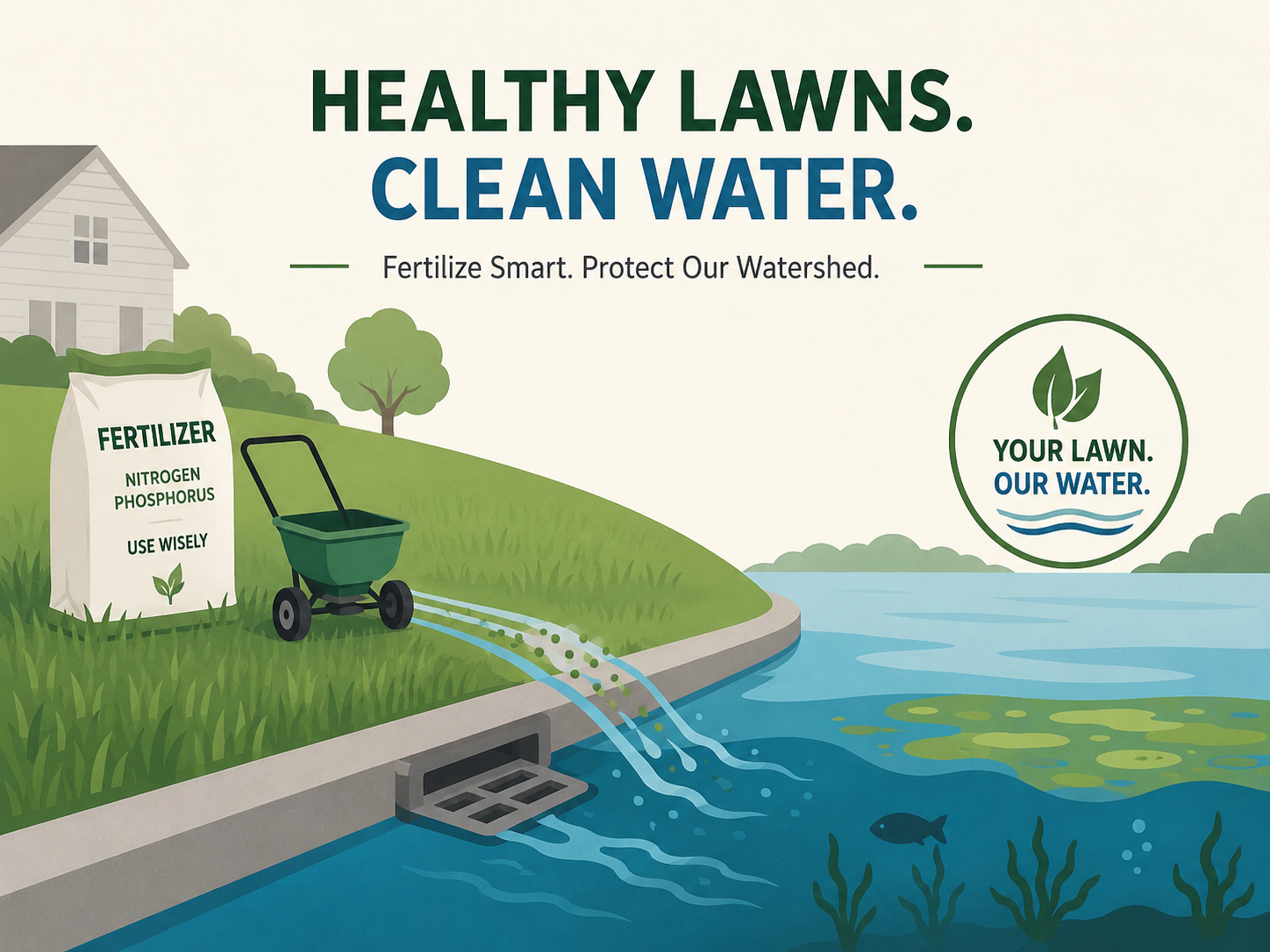
Rain or sprinklers will send the extra nitrogen and phosphorus in your lawn tumbling down slopes and driveways, and directly into the local streams and lakes. This is fertilizer runoff. And this is a significant issue.
More than enough nitrogen in the water begins to feed the algae. This causes excessive growth to the point of completely blocking the water column and the sunlight from reaching the aquatic plants. When algae die and decompose, they literally rob the water of dissolved oxygen to the point where no aquatic life, including fish, can survive. Scientists in the Chesapeake Bay are finding more than a million pounds of nitrogen, and a major portion of it comes from your neighborhoods. The lakes, local rivers, and streams are also suffering from the same issue.
Why Most Lawns Get Over-Fertilized
Most people fertilize by default. You see a large bag and it looks like the safe choice. You spread it across the lawn and you move on. But your lawn may not need extra nitrogen. If the soil is already rich, more nutrients are not the answer.
Fertilizing dormant grass is a losing deal. Dormant grass cannot take in nutrients. The nitrogen stays on the surface. Then rain shows up and washes it into the storm drain. After that, it runs into the stream. Then it ends up in the bay. That is money wasted. Fertilizers are also wasted. And it can be harmful.
Simple Ways to Cut Fertilizer Runoff
You don’t have to give up lawn care. You just need to do it smarter. Small swaps in your routine can protect nearby streams and lakes. Here are some practical changes:
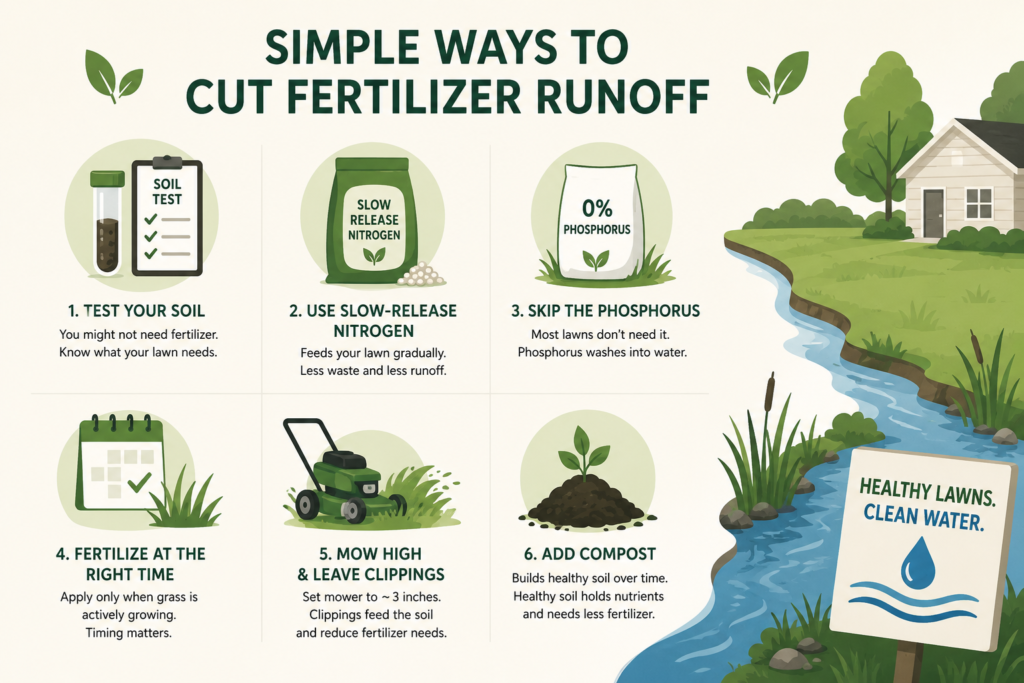
- Test your soil first. You might not need fertilizer at all. Soil test kits are available at many local parks and libraries. The results show exactly what your lawn needs. No guessing.
- Use slow-release nitrogen fertilizer. Fast-release nitrogen moves through the soil before grass can absorb it. Slow-release types feed your lawn gradually. Less waste and less runoff.
- Skip the phosphorus. Most established lawns don’t need it. Phosphorus washes easily into water. Look for fertilizers with no phosphorus added.
- Fertilize at the right time. Only apply fertilizer when your grass is actively growing. For cool-season grasses like fescue, that means early fall. Not winter. Not frozen ground.
- Mow high and leave clippings. Set your mower to about three inches. Leave the cut grass right on your lawn. Clippings break down and feed the soil naturally. You can cut your fertilizer needs by over thirty percent with this one step.
- Add compost. A thin layer spread across your lawn each year builds healthy soil over time. Healthy soil holds nutrients better and needs far less added fertilizer.
Your Lawn, Your Watershed
The condition of your neighborhood streams, ponds, and even the lakes starts with your yard. Make the effort by improving your yard, and your neighbors will not take long to follow. Soil testing should be done before all fertilization. Only fertilize sparse grass. Nitrogen does not belong in streams, just grass and soil.
Your yard can have a healthy look and a healthy watershed.