
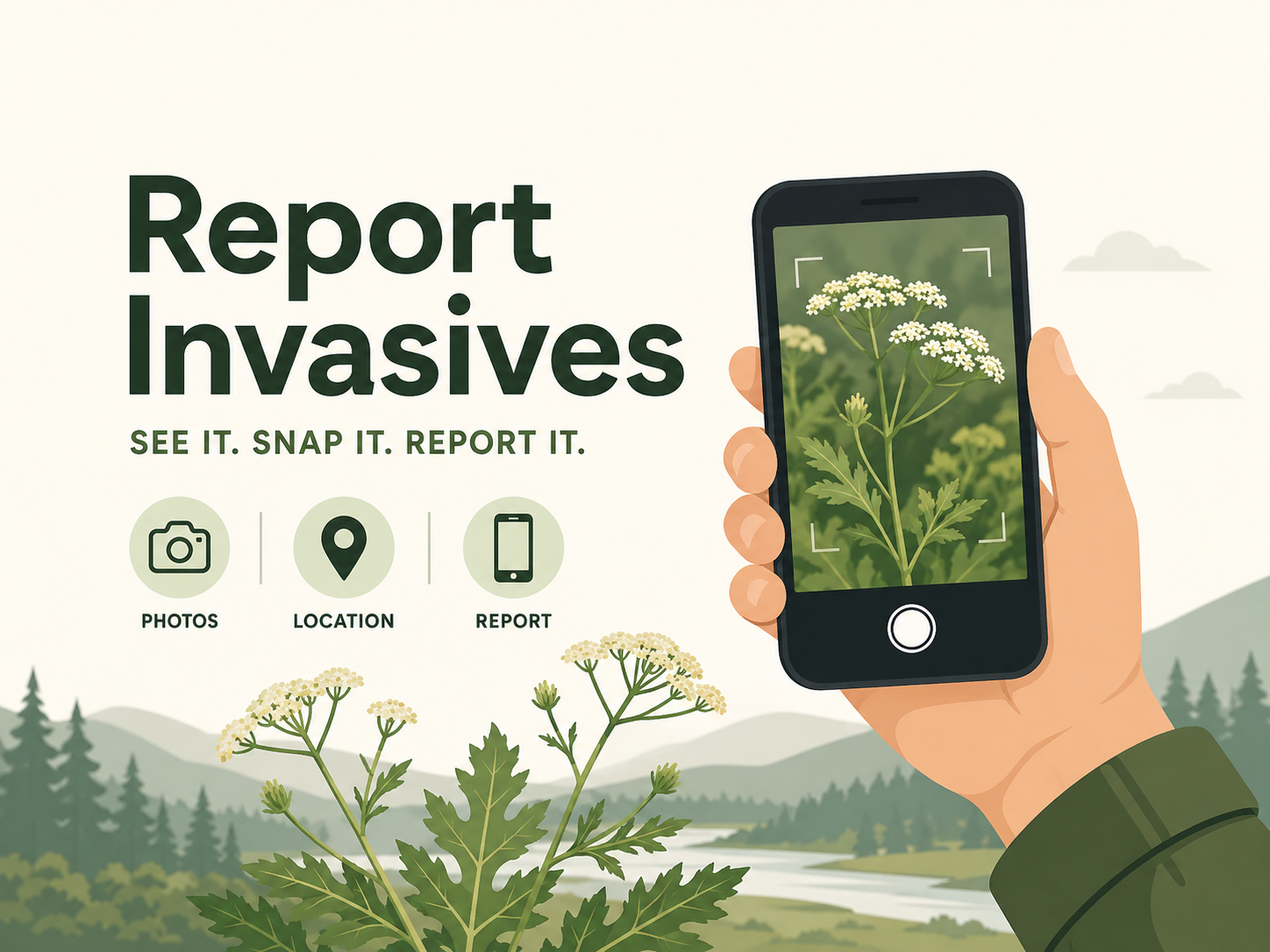
Invasive species are good at slipping in unnoticed. They arrive like an uninvited guest at a party. Then they spread fast. Damage can pile up before anyone connects the dots. But you can help stop that chain. As a volunteer, you can spot early signs that others may miss.
Every sighting you report gives professionals a better edge. Scientists and land managers can take action sooner. Prevention is the key here. It saves money and even helps protect entire ecosystems. In due course, we will cover the steps to report invasives properly.
Make Sure You’ve Got the Right Plant or Animal
Before you report anything, take a careful look. You want to feel confident about what you saw. Notice the size first. Then check leaf shape and color. Look at what is growing nearby. The soil can offer clues. Nearby water sources can also help confirm what it is.
Not sure what you’re looking at? Use an app to help. iNaturalist is a great free tool. Take a photo to help you figure out what you found. A huge community of nature experts and scientists can also weigh in. For kids or beginners, Seek by iNaturalist is even simpler. No sign-up needed. Just point your camera and go.
Take Good Photos
A blurry photo won’t help anyone. Get close and get clear shots of:
- The whole plant or animal
- Leaves, flowers, or bark up close
- The area around it
Good photos turn your report from a “maybe” into a solid “yes.” That’s the kind of data that gets things done. And honestly, it only takes about 30 seconds.
Record Where You Found It
Location data is huge. Without it, a report is basically useless. Drop a pin on your phone map right where you saw the invader. If your app doesn’t do that on its own, write a clear description. Something like “along the north trail near the old bridge” works just fine.
Also note how much of it you saw. One plant? A small patch? A whole field? That info helps teams figure out how urgent the problem is.
Use the Right App to Report It
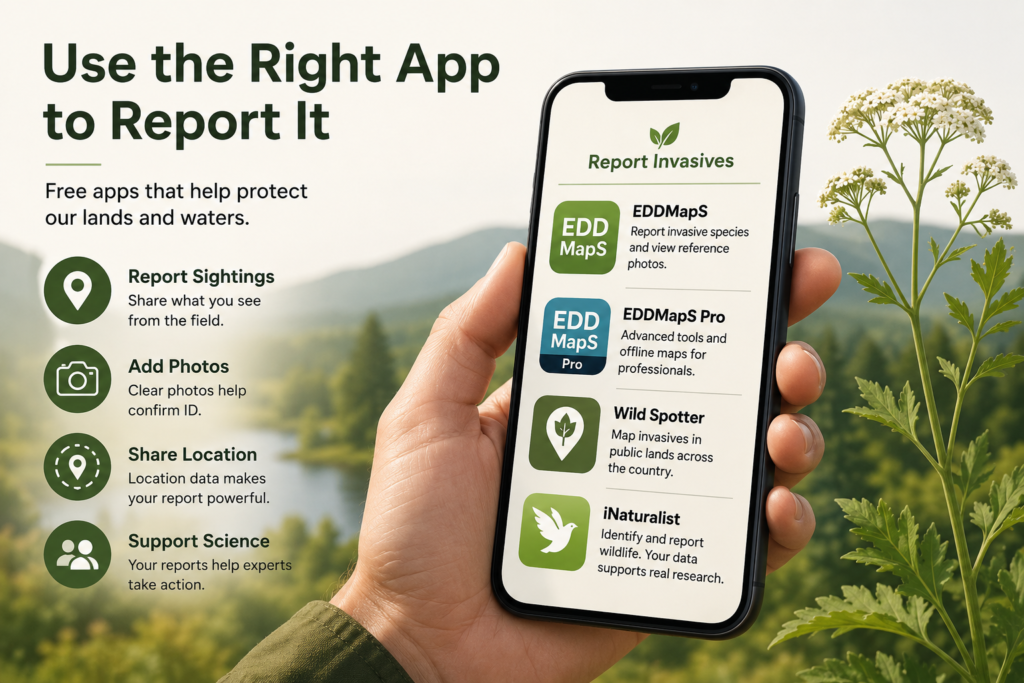
There are a few solid apps built just for invasive species reporting. All of them are free and work on Android and iPhone.
- EDDMapS by the University of Georgia: Submit sightings, add photos, and share location data from your phone in the field. It also includes reference photos of invasive species to help you figure out what you’re looking at.
- EDDMapS Pro: Built for professionals. Download offline maps for areas with no signal.
- Wild Spotter: A nationwide effort to map invasives in public lands. It connects directly to the EDDMapS database. Great for everyday volunteers who want to protect local trails and forests.
- iNaturalist: Great for spotting and reporting invasive wildlife. Your observations become real research data. Scientists across the country use it to study and protect nature.
Pick one and start with it. You can always try more apps later.
Contact Local Experts When It’s Serious
Some sightings need more than an app report. Spot something spreading fast near a farm or river? Reach out directly. Contact your state or local forest department. You can also try a nearby university or plant research center. They want to know about new or fast-spreading invaders.
Don’t second-guess yourself. Report what you see and let the experts check it out.
You’re Already Part of the Solution
The biggest hurdle is motivation. You need to make sure you understand your natural surroundings. You’ll see habitats and different kinds of wildlife you have never cared to look for before. If you love your natural surroundings, all you have to do to help invasive species is identify your location, snap a picture, and let an app do the rest. It helps monitor and assess invasive species.