
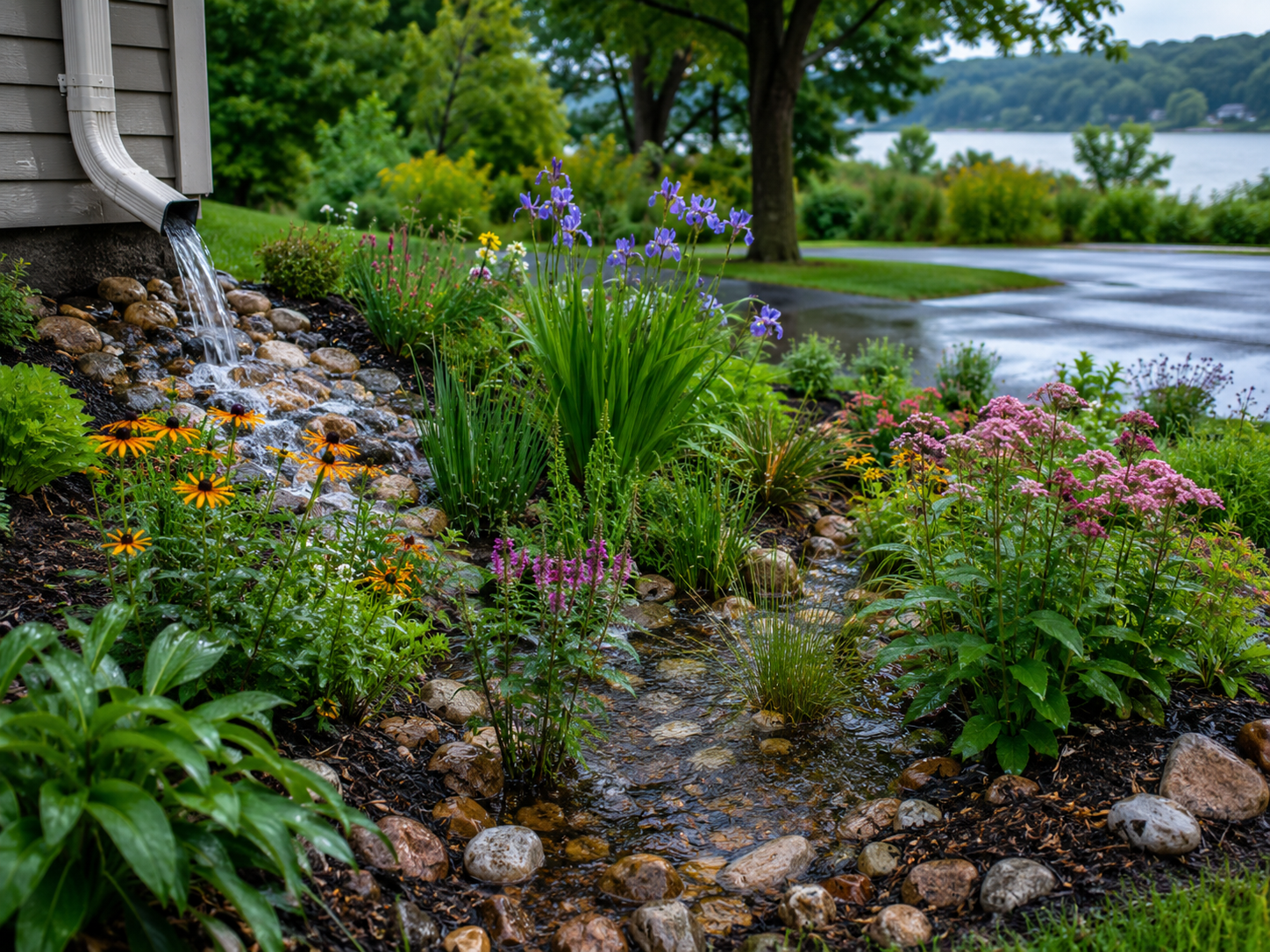
Every yard is part of a bigger watershed. Rain brings stormwater runoff that travels from your roof, various surfaces, and the street. On the way, runoff collects oil, pet waste, and fertilizers. Eventually, it dumps all the waste into nearby streams and, ultimately, into the bay.
A rain garden changes that by forming a shallow, bowl-shaped garden. Native plants and rain garden soil fill the garden. The garden captures stormwater runoff and soaks it into the ground. The soil and plants trap and filter all runoff before it reaches nearby streams, thereby supporting the bay.
Interestingly, rain gardens absorb 30% more water than a patch of grass. This is helpful for both your yard and the bay.
Pick the Right Spot
A good rain garden requires a good location. Look for the stormwater runoff and where water collects after a rain. The rain garden should also be at least 10 feet from your house. If it is closer, water can damage your home’s structure.
Before making a rain garden, call your utility services. They will check for any underground pipes or wires. They will mark the ground for you. This only takes a day and can help avoid many issues.
Prep the Soil
Good drainage starts with good soil. Dig down about eighteen inches and mix in sand and compost. The soil should feel loose and crumbly. Squeeze a handful. If it clumps, add more sand. You want water to sink in fast, not sit on top.
Here are three soil mixes that work well in rain gardens:
- Loamy sand: heavy on sand, light on silt and clay
- Sandy loam: a balanced mix with mostly sand and silt
- Silty loam: no sand, mostly silt with some clay
Each mix drains at a different speed. Pick the one that fits your local rain pattern.
Go Native With Your Plants
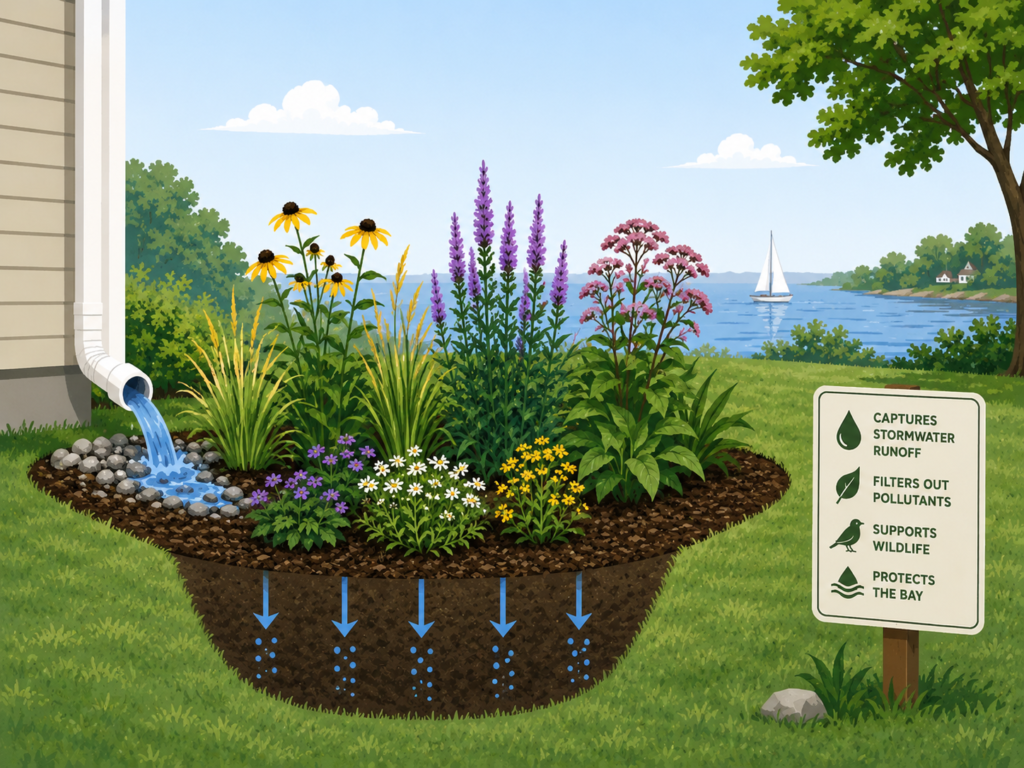
This part is actually fun. Native plants are the heart of any rain garden. They’ve adapted to your local area over hundreds of years. Their roots grow deep and pull water into the ground fast.
Plant taller, water-loving species in the center of the garden. Put drought-tough plants along the edges. The Native Plant Center website has a search tool to help you find the right species for the Chesapeake Bay area.
Some things to look for when picking native plants:
- Deep roots to pull more water into the ground
- Can handle both floods and dry spells all year
- Gives food or shelter to local birds and bugs
Exotic plants might look nice, but they often can’t handle the wet-dry cycles of a rain garden. Stick with natives. They’ll do the job and look great doing it.
Keeping It Going
Building a garden in a home’s backyard is hard work, and the first year is the most difficult. It takes a lot of watering to help plants grow, especially during hot patches. Weeding is crucial and should be done immediately to help stop a garden infestation. Weeds like to set up shop when fresh soil is added.
Luckily, after a year or two, a garden is mostly self-sustaining and requires little upkeep. Plants grow to fill open space and outgrow weeds, and little watering is needed. Weeding will help the garden’s drainage and should be done to remove old layers of mulch and dead leaves.
Your Yard Can Make a Difference
A rain garden is a small patch of land with a big job. It keeps dirty water out of the bay. When done properly, they help with drainage issues that can cause flooding and improve the aesthetic of a yard.
You don’t need a landscaping degree or a big budget to make it happen. All it takes is a good spot to dig and a shovel.