
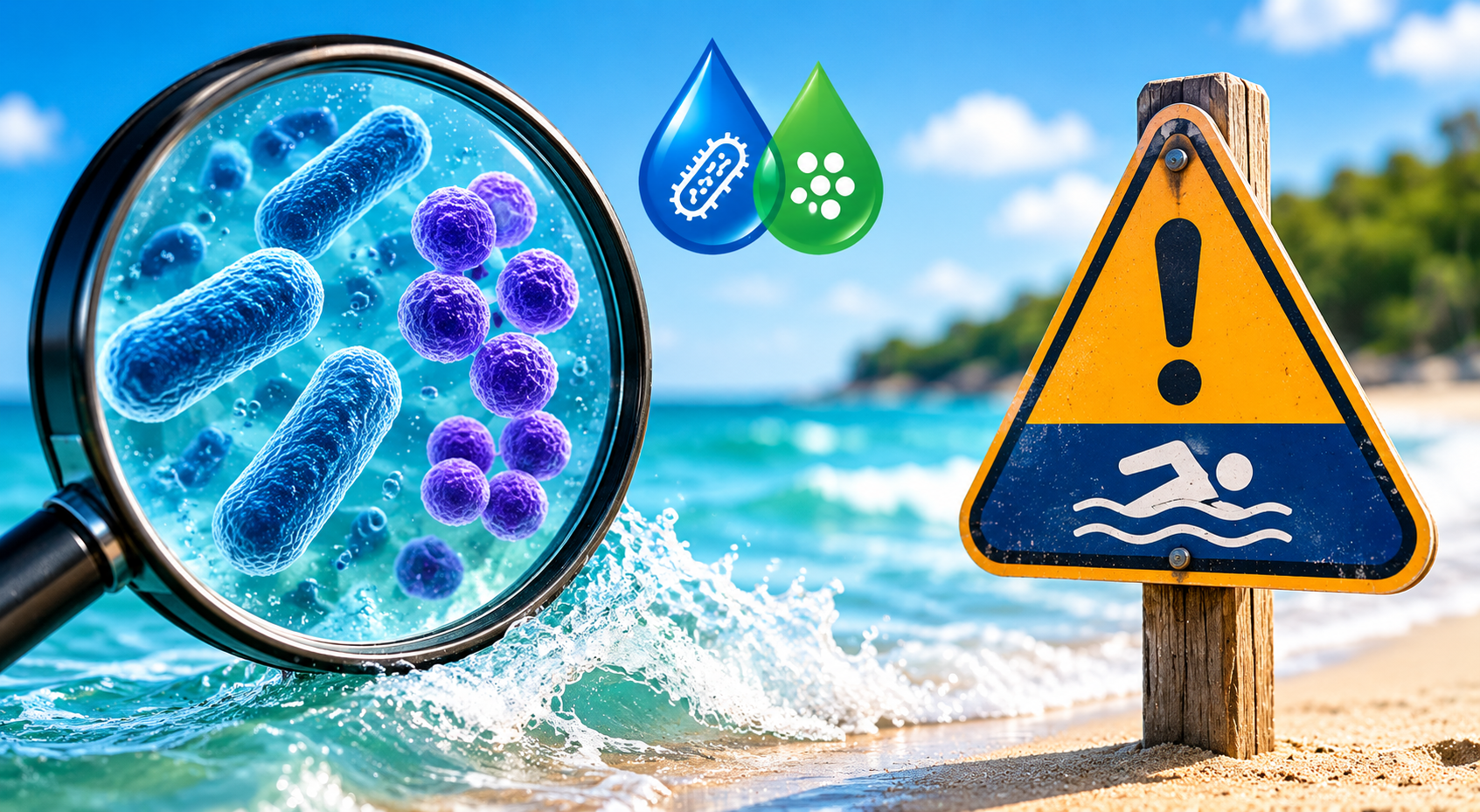
When you get to the beach, you want to lay down your towel, put on sunscreen, and take your first swim of the day. But then you see a “Water Advisory” sign. You deserve a straight answer. You want to know if it is safe to swim in.
For testing beach waters, two common bacteria are E. coli and Enterococcus. Both bacteria inform health officials that water has been contaminated with feces. Yes, it’s gross, but there is no guesswork in the data. The bacteria count determines when swimming is safe and when staying out of the water is recommended.
What Is E. coli?
E. coli lives in the guts of people and animals. Most types are totally harmless. But high levels in water are a red flag. They signal that fecal waste found its way in. That waste can carry other harmful germs too. E. coli is basically a sign that something dirty got in.
Health officials test freshwater beaches, like lakes and rivers, for E. coli most often. High counts trigger advisories. Sometimes officials close the beach entirely until the numbers come back down.
What Is Enterococcus?
Enterococcus is another type of gut bacteria. Health agencies use it as their main test for ocean and saltwater beaches. It tracks swimming illness better than other bacterial tests do. So at a coastal beach, Enterococcus is the number driving any advisory you see posted.
Any Enterococcus level above 104 per 100 mL allows a local health department to issue a warning. The EPA sets longer-term standards as well. For a multiple-sample assessment, the average must remain below 30 per 100 mL. No single sample may exceed 110 per 100 mL. Hit those limits too many times, and a beach could face a longer-term closure.
Where Does the Bacteria Come From?
Fecal bacteria don’t appear out of thin air. Common sources include:
- Old or broken septic systems
- Sewage overflows after heavy rain
- Stormwater runoff carrying animal and pet waste
- Waterfowl, livestock, and animals near the shoreline
- Leaky diapers from small children in the water
Rain is a big trigger. After a heavy storm, waste washes off the land and straight into the water. That’s why advisories pop up so often the day after a big rain. Water can bounce back fast, but give it at least a day before you wade in.
Can It Actually Make You Sick?
It can, yes. But swallowing water is the real risk. Just splashing around carries much less danger. Some people face more risk than others. Kids, older adults, and anyone with a weak immune system should be extra careful around flagged water.
Health effects can include:
- Diarrhea
- Ear infections
- Skin rashes
- Respiratory issues
- Kidney damage in rare and serious cases
What About Fish?
Bacteria in the water does not harm fish or make them unsafe to eat. The fish are fine. Just clean, store, and cook your catch properly before eating it. That’s smart practice regardless.
How to Protect Yourself
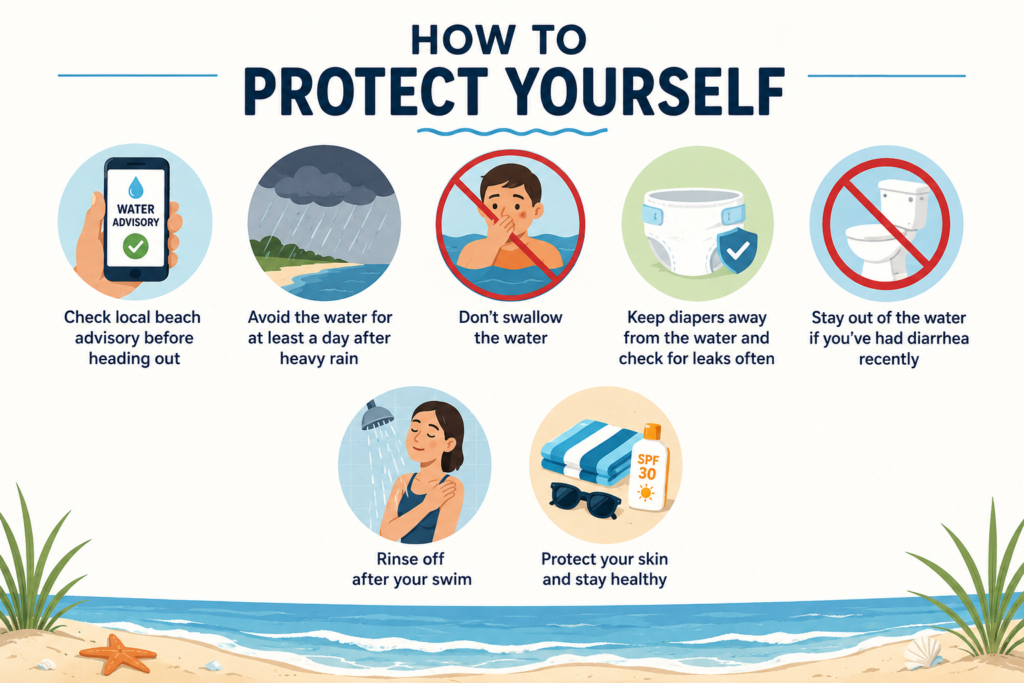
A few simple habits go a long way:
- Check your local beach advisory before heading out
- Avoid the water for at least a day after heavy rain
- Don’t swallow the water. Seriously.
- Keep diapers away from the water and check for leaks often
- Stay out of the water if you’ve had diarrhea recently
- Rinse off after your swim
These small steps can save you a rough few days with stomach trouble.
The Bottom Line
A beach advisory is not a warning that the water is gone for good. It is a short-term signal. The bacteria count is too high right now. The good news is that it usually does not last long. Levels often return to normal within a day or two. This can happen once the water clears after rain.
Most people never hear how common fecal bacteria is in swimming water. That is why one habit matters so much. Check local water quality reports before each visit. Now you know what the test results mean. You can make a smarter call before your next swim.