
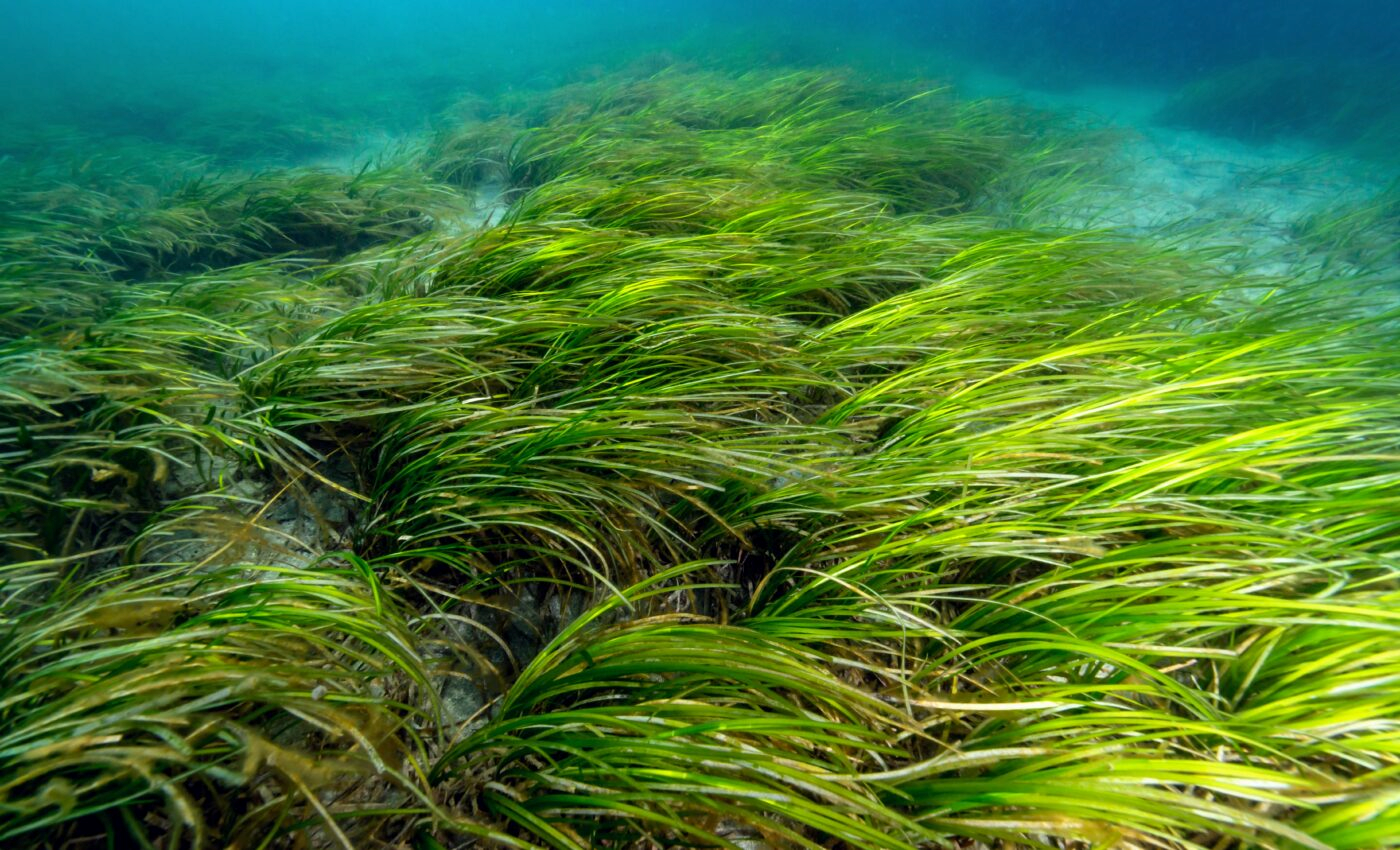
Most people miss it. Eelgrass meadows grow just below the water’s surface and do important work each day. Their subtle movements and contributions deserve more recognition. Eelgrass meadows are ocean secrets that deserve our appreciation.
What Exactly Is Eelgrass?
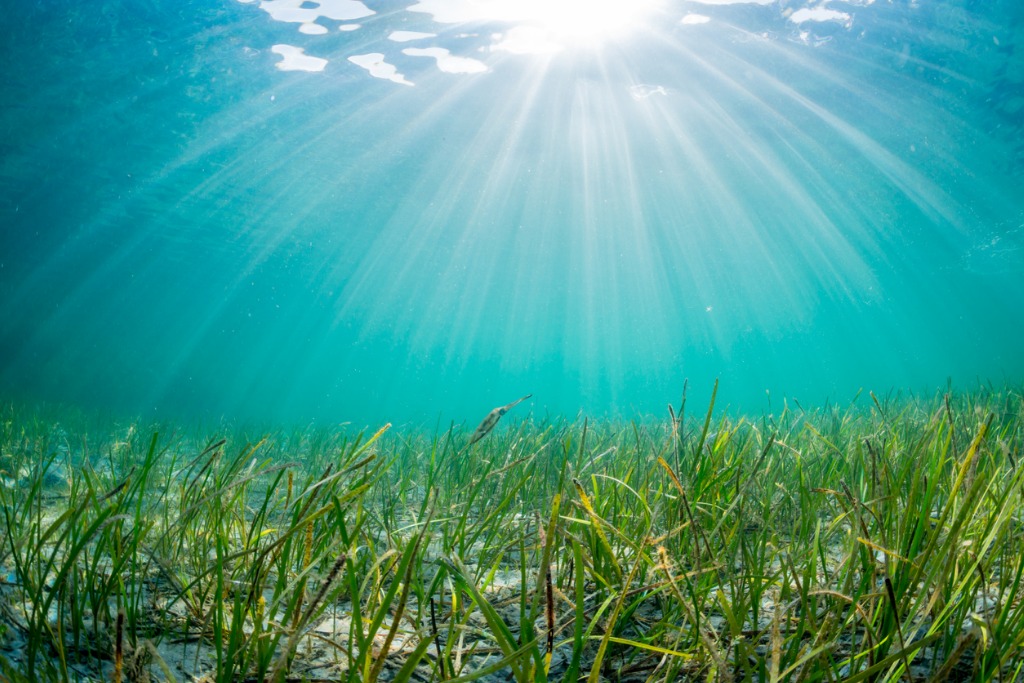
Eelgrass is not seaweed. But it is a flowering terrestrial plant that grows in the water. It is unlike most plants. Eelgrass anchors itself in the sea floor with its leafy stems and roots. In due time, eelgrass can fill submerged meadows. It spreads its lush greenery just below the surface.
Places like Coos, Yaquina, and Tillamook Bays in Oregon are nutrient dense and receive a lot of sunlight and are thus optimal locations for seagrass meadows to form.
Everything Lives in There
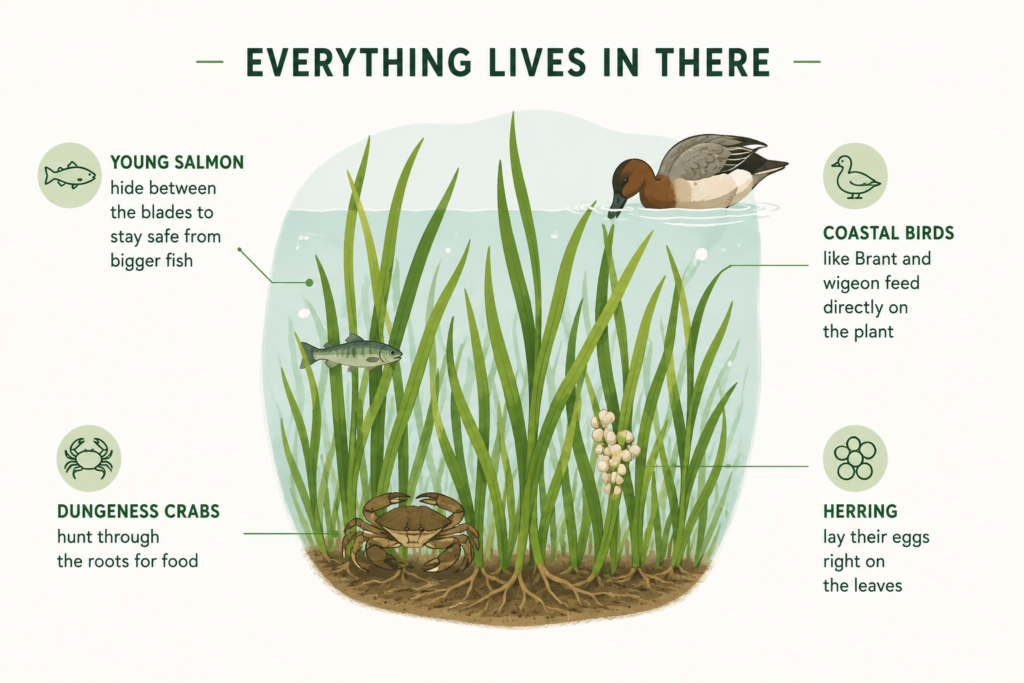
The eelgrass habitat acts like a nursery for sea life. All kinds of creatures depend on it:
- Young salmon hide between the blades to stay safe from bigger fish
- Dungeness crabs hunt through the roots for food
- Herring lay their eggs right on the leaves
- Coastal birds like Brant and wigeon feed directly on the plant
Eelgrass also cleans the water around it. It traps dirt and soaks up extra nutrients that would otherwise cause harmful algae blooms. A cleaner bay ecosystem benefits everyone from fishermen to families who swim there in summer.
It Fights Climate Change
Eelgrass stores carbon like a hardworking sponge. It pulls carbon dioxide out of the air. Then it traps that carbon deep in the mud beneath it. Scientists call this “blue carbon.” Coastal plants like eelgrass, mangroves, and tidal marshes store carbon at about three times the rate of land forests. Three times.
Eelgrass also helps keep the sea floor steady. Its roots hold the ground in place. Less erosion happens over time. Shorelines also get more protection from storm waves. So I see it as one plant with many jobs. It feeds wildlife. It cleans the water. It also shields the coast all at once.
The Threats Are Real
Eelgrass is disappearing fast. Pollution is a major cause. Coastal development is also harmful. Dredging can remove whole patches. Rising water temperatures can stress these meadows for long periods. Invasive species like the European green crab dig into the sea floor. Eelgrass beds are damaged and destroyed. In parts of Oregon, eelgrass cover has dropped by more than 80%. Around the world, we lose about two football fields of seagrass every single hour.
Oregon has also lost more than half of its total coastal habitat. That is a serious hit. Marine biodiversity is reduced. The bay ecosystem is thrown off balance. Many species depend on it.
Restoration Is Possible
Eelgrass can fully regenerate. In the Chesapeake Bay, restoration of seagrass led to 9,000 acres of eelgrass and also rebuilding the entire food web. In the Puget Sound, shoreline reinforcement worked in eelgrass bed rehabilitation. All of this is evidence of the success that eelgrass restoration can have when the effort is made.
There is a lot of room for improvement in the protection and restoration of marine meadows, and the same goes for the monitoring and the coordination. What remains needs to be protected now. What was lost can be restored.
Eelgrass meadows have served their purpose for a long time. It is time for us to do the same.